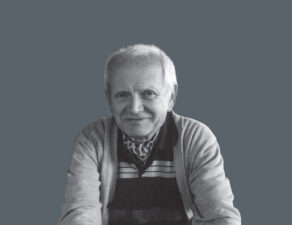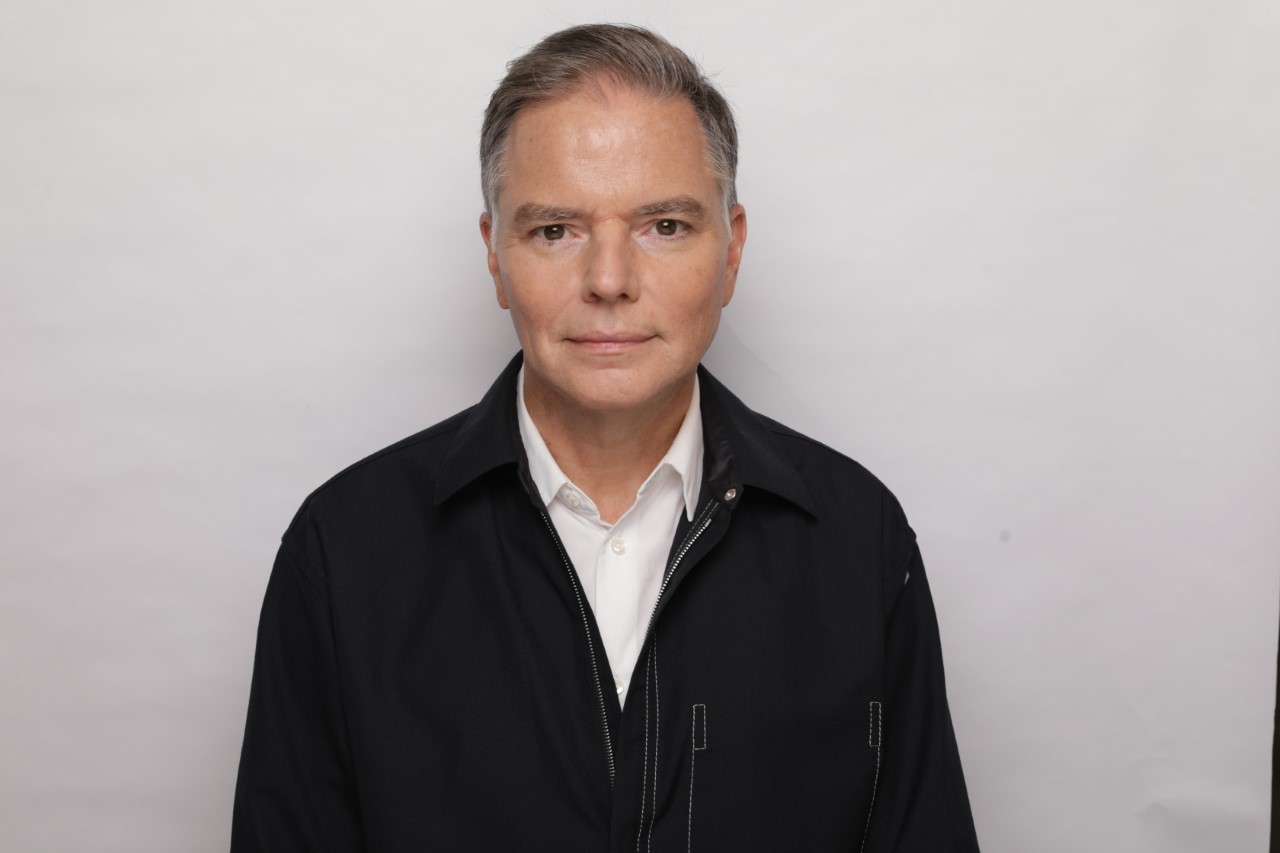
Historian, writer, curator in urbanism design and architecture – Ole Bouman.
Ole Bouman has been the founding director of the museum of design and platform Design Society in Shenzhen since 2015, which is now in the second year of its full running, and is also listed by Time Magazine amongst The World’s 100 Greatest Places. Some of his past engagements include: editor-in-chief of Volume (a magazine he co-founded with OMA and Columbia University, which ran from 2005 to 2007) and director of the national Netherlands Architecture Institute (NAi) (2006-2013). He also worked as a curator for Manifesta 3 (2000), and curated the national pavilions at the Biennales of Shenzhen, São Paulo and Venice. He was creative director of the Bi-City Biennale of Urbanism/Architecturein Shenzhen (UABB) from 2013-14 as well. His publications include The Invisible in Architecture (co-author, 1994), Ubiquitous China (2006), Architecture of Consequence (2009) and Design Society: the Making of a New Creative Platform (co-editor, 2017). Bouman taught Architecture and Design at the Massachusetts Institute of Technology and the University of Hong Kong. In 2018 he received the Shenzhen Creative Influencer Award.
So, here is the work that never is “done”.
How important is communication in human-built relations? What can we learn from it and what can architects and urban planners do to enhance that dialogue?
There is probably a book written about this already, full of examples of how architecture throughout the ages has fostered dialogue. It is a rich and wonderful topic. If I would write such a book, perhaps I would distinguish between dialogues as part of the brief, for instance, parliament buildings, lecture halls, meeting rooms, living rooms in family houses, and dialogue as a bonus of any truly great architecture. In the first part, architecture would be presented as the art of interpreting a client’s wish, with all the degrees of technical and metaphorical power of design. In the latter part, though, it would not be about interpretation, but more about value and art and how they inform a creative pursuit to create dialogue beyond what we know or expect. A tree becoming a congregation space, a bench becoming a facility for encounters, a church lifting up the spirit for a dialogue with the Holy. Architects, from the most practical service providers, to artists who reach new levels of spatial art and organization, can make a career choice out of this: do they see their work as a punctuation of life, or as a stage of it. Do they start with matter or with space? With walls, or with circulation and encounters.
According to Design Society’s agenda under your leadership, social cohesion and outreach are an important aspect of the design community. What are those initiatives telling us?
Design Society has chosen dialogue as its agenda by positioning design as a social catalyst. Design for us is a medium, not a goal in itself. This stance has at least two consequences for our program. On one hand, we try to expand the notion of design to include lifeworlds for people who do not think and speak about design all the time to demonstrate its relevance in finding your place in society, or in setting up an enterprise, or in taking care of your environment. We explicitly offer programs for a variety of audiences, young and old, working or retired, local community members or footloose globetrotters. On the other hand, we promote this concept of design to the professional community, taking a stance as a cultural institution. Design Society is our statement.
You have curatedthe 2013 UABB Urban Border, and 6 years later, have participated at the same event as part ofthe Academic Committee lineup. Could you compare your responsibilities and your point of view of those two roles?
I was the creative director of one specific installment of the UABB in 2013. My responsibility for the main venue was to become a place of culture for the time of the Biennale, but with lasting effects. My work was an act of transformation, again, not just in terms of a physical intervention, but also as a new program, a series of events, and a new branding campaign to make the place known to the whole city. As this aim was substantiated during the Biennale, they asked me to become a member of the Academic Committee and to remain available for the assessment of future installments, and to provide advice to the city in the further development of the UABB as an urban force, not just a cultural festival for 3 months per 2 years.
Do you think that design and planning priorities have been shuffled in the year of the spread of the pandemic and do you believe in the collective rethinking of social values to come?
The pandemic has a chilling effect on the economy, but maybe an even more chilling effect on our belief that we can change our unsustainable habits just out of free will. In the past 10 months, there has been a certain willingness to rethink our systemic features as a result of the pandemic. Some key influencers have raised the possibility. But, very little has actually been accomplished so far. There has not been a major boost in the green economy. There has not been a solid criticism to the rapid further digitization of our lifeworld. Now, with the advent of several vaccines, people can’t wait to get rid of this prolonged inconvenience. So, yes, there has been change, but this was forced upon us, creating a small dent in the universal overshoot condition. For the long term resolutions, we have to do more, much more.
How would you describe the essence of preservation and how can one identify what to keep and what not?
Thinking of it, I see several degrees of seriousness with regards to preservation.
1. It can be a matter of tasteand part of a conservative mindset. You can use it in your marketing or in building political clout. It’s often a matter of optics.
2. It can be a moral stance, a choice in an ethical worldview. You can live up to it and try to convince others. It becomes part of a mentality of restraint.
3. It can be a systemic feature, a dimension of the entire way we organize our society. A criteria of survival.
The latter one is the one we really need. It’s also the one we are still very far away from. We live in such paradoxical times that even restraint is one out of many narratives, which may support the ego more than the other way around.
For architecture, this has an extra implication. For centuries, because of its generalism, it was often the art of moderating extremes, including, accommodating and mitigating opposing forces. It was the art of measure. But, architecture has given up this role, taking sides with single issues of clients, rather than incorporating these issues in the larger social responsibility that comes with architecture. Architecture often is an executive arm of a particular interest. And, that shows…
What is the media’s position in architecture and planning today?
I am afraid it’s rather poor. Architectural media is more than ever concerned about what the situation in the world means to architecture. And still, little debate is happening about what the situation in architecture means to the world. I will shortly publish my new website, which brings my thoughts on this comprehensively altogether. I believe that one of the fundamental challenges of architecture is its inability to go beyond itself. Over the centuries and decades, it has been so dramatically reduced in scope, that the remaining margin is obsessively defended for an ever smaller audience. I just published an article called The Solipsism of Architecture on this topic.
You recently have been retiring from Design Society. What were the challenges you were facing?
It is not very different from any other cultural institution. We kept learning lessons everyday. One lesson is to keep exploring new creative ideas and welcome and cultivate ideas of others. For this to happen, we need to cherish our cultural antenna and to cultivate debate. Another lesson is how important it is to have the quality to execute these ideas. For Design Society,this means sticking to the standard that has been set from the very beginning, by building and maintaining the unique architecture of Fumihiko Maki’s Culture & Arts Center. A third lesson learnt is that for both ideas and quality, a top team is required, in which space for new talent is a given. Next to brain power and executive excellence, another lesson we learned is the need of consistent brand development, and the continued faith in the brand values of positioning design intelligence as a social catalyst. Finally, knowing the material investments needed to realize all this, it is important to learn the importance of sticking to a businesscase, giving the time to develop a comprehensive earning mechanism that benefits from quality rather than jeopardizing it.
After three years of practicing as a mobile and responsive cultural operator, we know now what it takes: a great sense of hospitality, a natural inclination to collaborate, an international mindset and, last but not least, the power of patience.
So,here is the work that never is “done”.
In this issue of ARHITEKTA magazine, we are confronting principals of the “New Wave” in modern art movements, such as film, against the planning and design process. Could you make your project “pick” what represents brave and unconventional rethinking today?
I think one of the most persistent, comprehensive and intelligent offices promoting a completely different approach in architecture as an art of addressing scarcity is Superuse Studios in Rotterdam.
What next?
I have had the privilege to build a magazine, a professional institute, a cultural venue and a new museum and design platform. Whatever cultural analysis, whatever socia lurgencies, I have always tried to create a positive example of alternative practice. But our urgencies have reached an undeniable existential level. Maybe I should put my efforts more into preventing, securing and consolidating.
Let me get back to you as soon as possible.
Prepared by: Jakša Nikodijević M. Arch, for the 12th issue of the magazine “Arhitekta”